

Files
Download Full Text (1.2 MB)
Description
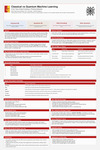
This is a planned study that compares how much does data encoding techniques affect Quantum Machine Learning (QML) performance compared to Classical Machine Learning (CML)? Unlike classical models, QML cannot directly read a dataset; it must first convert features into quantum states using conversion methods like Classical machine learning reads normal numbers directly, but Quantum machine learning first turns those numbers into quantum form (qubits) that can be present in multiple states at once. This strengthens core AI skills for data preprocessing, PCA (Principal Component Analysis) features, model training, and evaluation. These are the basic building blocks of both approaches, then testing them on the same data. I will compare common classical baselines against QML approaches to run on a simulator and will report prediction quality (F1 score). Moreover, practical evaluations like testing multiple encoding techniques under the same experimental conditions and focusing on encoding driven behavior and publishable contribution as it clearly guides which encoding works best for which dataset conditions. The poster will define the main terms for both CML and QML, showing how they are related to explaining the major differences. The project produces clear plots, and guidelines on which encoding choices are most reliable for security style datasets. Concerning education, this can be used as a teaching resource for AI evaluation and emerging QML workflows. In conclusion, this comparative analysis for a small AI and Security task (phishing detection using a tabular dataset of URL/email features) demonstrates strong skills in machine learning, and emerging QML tools that are valuable for research and development.
Department of Primary Author
Technology (Emphasis in AI)
Affiliation of Primary Author
Student
Publication Date
2026
Recommended Citation
Shafique, Muhammad Huzaifa, "Classical vs Quantum Machine Learning: A Fair Test of Data Encoding in Phishing Detection" (2026). Posters. 6.
https://digitalcommons.pittstate.edu/ai-posters-2026/6