

Files
Download Full Text (361 KB)
Description
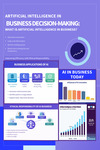
Artificial intelligence (AI) has become a transformative force in modern business administration, reshaping decision-making processes, operational efficiency, and organizational strategy. As businesses generate increasingly large and complex datasets, AI-driven systems provide analytical capabilities that exceed traditional methods, enabling organizations to identify patterns, forecast trends, and respond proactively to changing market conditions. This presentation examines how artificial intelligence functions as a decision-support tool across key business areas, including finance, marketing, human resources, and operations. It highlights the benefits of AI-enabled analytics, automation, and visualization tools that improve accuracy, reduce human error, and enhance managerial consistency. While these advancements offer significant competitive advantages, the presentation also emphasizes the ethical challenges associated with AI adoption. Issues such as algorithmic bias, data privacy, transparency, misinformation, and workforce impact are explored to demonstrate why responsible AI governance is essential. Drawing on academic research and industry reports, this project argues that ethical oversight must be treated as a strategic business responsibility rather than an optional safeguard. Ultimately, the presentation advocates for a balanced approach in which innovation and ethical accountability work together to ensure sustainable, trustworthy, and effective AI implementation in business environments.
Department of Primary Author
Data Science & Information Systems
Affiliation of Primary Author
Student
Publication Date
2026
Recommended Citation
Cowan, Amanda-Michelle, "Artificial Intelligence in Business Decision Making: What is Artificial Intelligence in Business?" (2026). Posters. 2.
https://digitalcommons.pittstate.edu/ai-posters-2026/2