
-
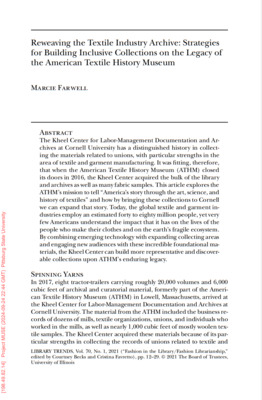
Reweaving the Textile Industry Archive: Strategies for Building Inclusive Collections on the Legacy of the American Textile History Museum
Marcie Farewell
The Kheel Center for Labor-Management Documentation and Archives at Cornell University has a distinguished history in collecting the materials related to unions, with particular strengths in the area of textile and garment manufacturing. It was fitting, therefore, that when the American Textile History Museum (ATHM) closed its doors in 2016, the Kheel Center acquired the bulk of the library and archives as well as many fabric samples. This article explores the ATHM’s mission to tell “America’s story through the art, science, and history of textiles” and how by bringing these collections to Cornell we can expand that story. Today, the global textile and garment industries employ an estimated forty to eighty million people, yet very few Americans understand the impact that it has on the lives of the people who make their clothes and on the earth’s fragile ecosystem. By combining emerging technology with expanding collecting areas and engaging new audiences with these incredible foundational materials, the Kheel Center can build more representative and discoverable collections upon ATHM’s enduring legacy.
-
A Companion to Textile Culture
Jennifer Harris
"Textiles are rarely preserved in archaeological contexts, often leading to an incomplete and even biased picture of their role in past cultures. When textiles do survive, however, a wide range of interdisciplinary methods and approaches can be applied to them, leading to information regarding their date, raw materials, and provenance. Indirect evidence consisting of archaeological textile tools, written sources, iconography, as well as archaeobotanical and archaeozoological remains can provide additional evidence about textile production, use, and economy of the resources. This empirical data obtained from the extant archaeological textile finds informs cultural aspects, such as the role of gender in cloth manufacture, long-distance trade in textiles, and the use of textiles for signaling identities"
-
Nelly Don's 1916 Pink Gingham Apron Frock: An Illustration of the Middle-class American Housewife's Shifting Role from Producer to Consumer
Sherry Haar and Mikyoung Whang
Nelly Don created a stylish, practical, affordable pink gingham housedress in 1916, quickly selling out her first order of 216 dresses at Peck's Dry Goods Company in Kansas City. This study investigated the reasons behind the success of her dress, and found that during the early 20th century, women's roles shifted from that of producer to consumer, and that clothing was a visible reflection of this shift. Specific design attributes and social appeal contributed to the success of the housedress. Integrating trendy design elements into an affordable housedress along with the growing demand for a stylish, yet practical housedress induced by consumption culture in the early 20th century facilitated the success of Nelly Don's pink gingham housedress. As such, Nelly Don's 1916 housedress reflected social and cultural change in this transitional period, and exemplified the shifting role of the middle-class American housewife by offering an alternative to the traditional Mother Hubbard housedress as well as a lifestyle free of long hours spent sewing.
-

100 Ideas that Changed Fashion
Harriet Worsley
100 Ideas that Changed Fashion chronicles the most influential fashion ideas through which womenswear has evolved, offering a unique and engaging perspective on the subject.
-
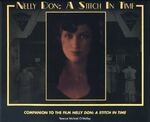
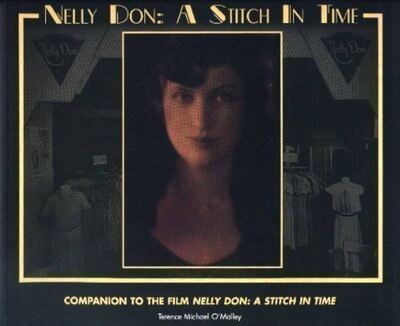
Nelly Don: A Stitch in Time
Terence Michael O'Malley
Tells the story of Nell Donnelly, who created a fashion empire and became one of the wealthiest and most celebrated American women in business. She was one of the first and most successful self-made women millionaires in American business, designing and selling more dresses in the 20th century than any other single person in the United States and challenging the notion that women were best suited for domesticity.
-
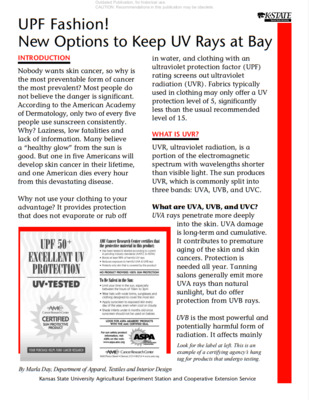
UPF fashion! New options to keep UV rays at bay
Marla Day
"Nobody wants skin cancer, so why is the most preventable form of cancer the most prevalent? Most people do not believe the danger is significant. According to the American Academy of Dermatology, only two of every five people use sunscreen consistently. Why? Laziness, low fatalities and lack of information. Many believe a “healthy glow” from the sun is good. But one in five Americans will develop skin cancer in their lifetime, and one American dies every hour from this devastating disease."
-

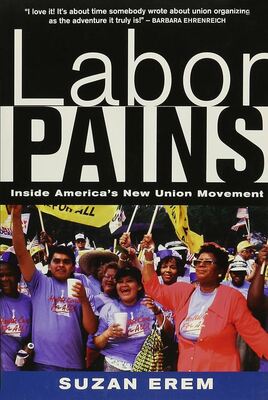
Labor pains : Inside America's New Union Movement
Suzan Erem
Labor pains is an insider's account of the struggle to rebuild a vibrant and powerful trade union movement in the United States. It takes as its starting point the daily experience of a union organizer, and brings that experience to life. It explains how the conflicting demands of race, class, and gender are lived in the new union movement. The role of the unions is defined mainly by larger economic and political agendas. While keeping these agendas clearly in sight, Erem focuses primarily on aspects of the life of the union which often remain hidden. The personal crises of union members become entangled in the work of the union. The energies of the union are focused not only on winning gains from bosses but also on maintaining internal cohesion and morale among workers. Barriers of race, age and gender are constantly negotiated and overcome, and conflicts flare up across them at moments of tension. And union life goes on not only when the workers have made their point, or won a victory, but after defeat as well. The personalities and ambitions of union organizers converge at times and become a source of tension at others. Each individual within the larger collective has their own task of finding a viable balance between public and private selves. These intersecting lines of force are imaginatively recreated in this book. Erem writes as a woman in a union movement which is dominated by men; as the child of immigrants in a movement whose members are increasingly immigrants themselves; as one who finds herself in the racial no man's land between black and white. While never underestimating the obstacles in the way of the union movement, she makes a powerful and passionate case for organizing the unorganized and empowering the powerless.
-

Integrating Quality into the Textile and Apparel High School Curriculum
Deborah J. C. Meyer, Sara J. Kadolph, Sarah Cosbey, Julie Hillery, Sherry Haar, Marla Day, Sandra Keiser, and Kendra Brandes
Explains the importance of quality assurance in high school textiles and apparel instruction. Describes educational activities that integrate quality assurance concepts (teamwork, continuous improvement, customer focus, and empowerment). (Contains 23 references.) (SK)
-

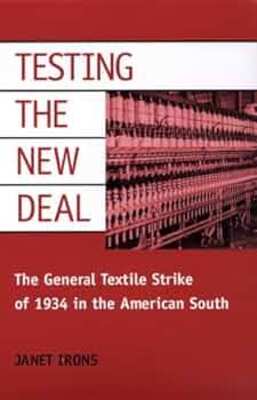
Testing the New Deal: the general textile strike of 1934 in the American South
Janet Christine Irons
Contents: Customary rights -- Homegrown unions -- Union-management cooperation -- New rules -- Dirty deal -- A battle of righteousness -- We must get together in our organization -- No turning back -- Anatomy of a strike -- Which side are you on? -- Aftermath.
-
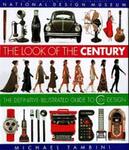
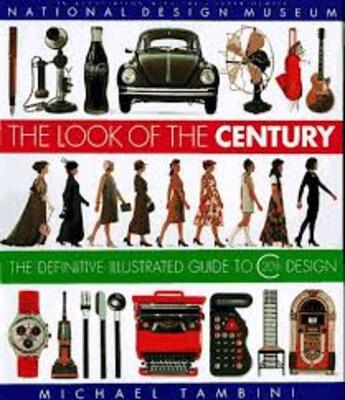
The Look of the Century
Michael Tambini and Cooper-Hewitt Museum
Describes with pictures the change in fashion, transportation, accessories, and many other items over the century.
-
Senatorial Immortal
Lee Meriwether
A biography of James Reed, Senator of Missouri (1911-1929) and Mayor of Kansas City (1940-1904).
-
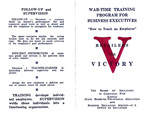
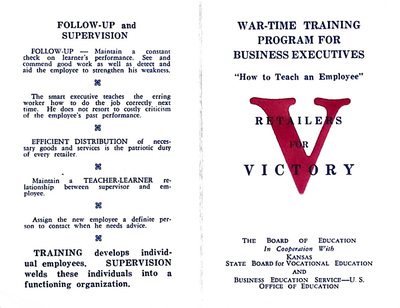
War-Time Training Program for Business Executives and Ration Books
Board of Education and Office of Price Administration
A pamphlet on how to teach an employee alongside a war rations book belonging to Murray W. and Marlin Robert Meador. Both items come from the Meador Family Collection, MS 190.
-
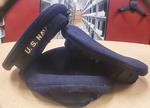
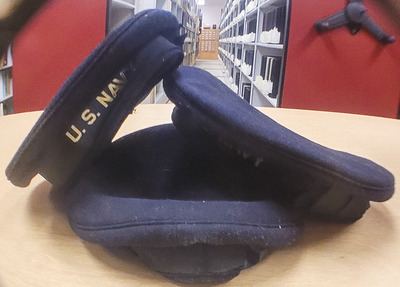
Naval Hats - F. Bozick
Frank Bozick
U.S. Navy hats from the Frank Bozick collection. Collection includes three U.S. Navy caps and two berets belonging to John F. Bozick who served in the U.S. Navy during World War II.
-

The Home Decorator and Color Guide
Rockwell Kent and Sherwin-Williams
"This work has been selected by scholars as being culturally important and is part of the knowledge base of civilization as we know it. This work is in the public domain in the United States of America, and possibly other nations. Within the United States, you may freely copy and distribute this work, as no entity (individual or corporate) has a copyright on the body of the work. Scholars believe, and we concur, that this work is important enough to be preserved, reproduced, and made generally available to the public. To ensure a quality reading experience, this work has been proofread and republished using a format that seamlessly blends the original graphical elements with text in an easy-to-read typeface. We appreciate your support of the preservation process, and thank you for being an important part of keeping this knowledge alive and relevant." [Description from Amazon posting]
-
The language of fashion; dictionary and digest of fabric, sewing and dress
Mary Brooks Picken and Editorial & Research Staff
-
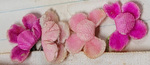
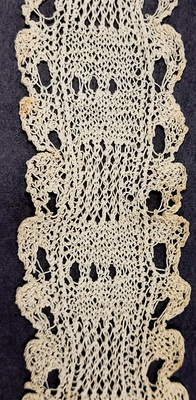
Textiles and Objects - J. T. Schoenborn
John T. Schoenborn
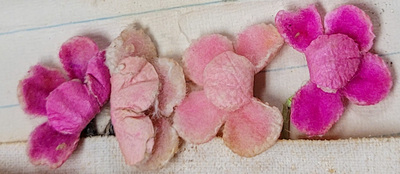
Various objects and textiles including but not limited to: pentagon shaped compact mirror with Scottish Rite Freemasonry symbol, lace bonnet, crochet square, and a pattern.
-
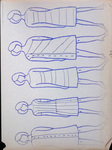
Textile Notebook 1 - B. Lance
Beryl Lance
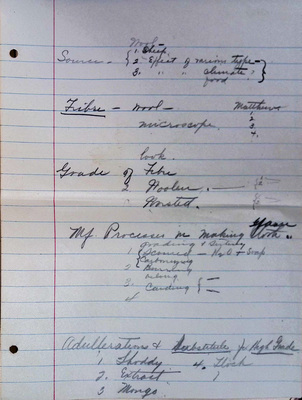
Handwritten notes for a textiles course taken by Beryl Lance at the Standard Manual Training Normal (SMTN) School [now Pittsburg State University]. Includes handouts for students.
-
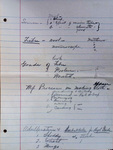
Textile Notebook 2 - B. Lance
Beryl Lance
Handwritten notes for Textiles C1-1 course taken at State Manual Training Normal (SMTN) School [now Pittsburg State University] by Beryl Lance.
-
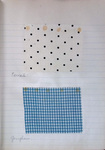
Textile Sample Book - B. Lance
Beryl Lance
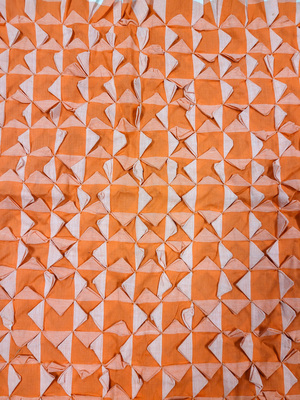
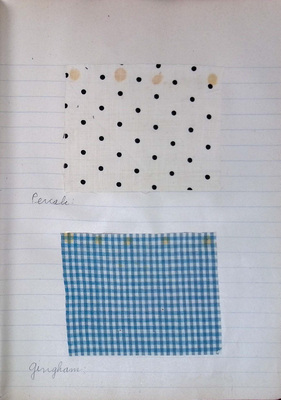
Sample book of textile and descriptions of fabric types: cotton, wool, silk... created by Beryl Lance at the Standard Manual Training Normal (SMTN) School [now Pittsburg State University.
-
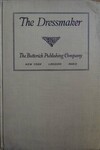
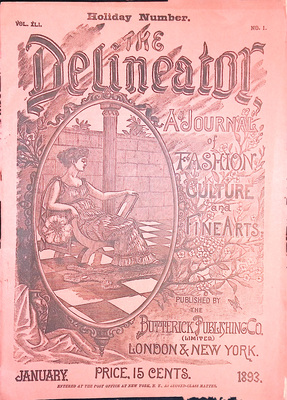
The Dressmaker
Butterick Publishing Co.
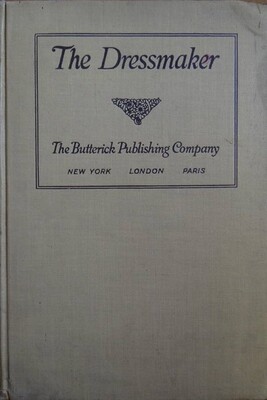
[Subtitle] A Complete Book on All Matters Connected With Sewing and Dressmaking, from the Simplest Stitches to the Cutting, Making, Altering, Mending and Caring for the Clothes.
-

Models in Domestic Art
Kansas State Manual Training Normal School Department of Home Economics
[Subtitle] Illustrating the common principles of hand sewing as taught in the State Manual Training Normal, Pittsburg, Kansas
Printing is not supported at the primary Gallery Thumbnail page. Please first navigate to a specific Image before printing.